Why Markets Feel So Uncertain Right Now - March 16, 2026
Why Markets Feel So Uncertain Right Now
March 16, 2026
Investors experienced another challenging week as inflation data, geopolitical tensions, and energy price volatility combined to create a difficult environment for markets.
While periods like this can feel uncomfortable, they also serve as a reminder of why disciplined planning and risk management are so important.
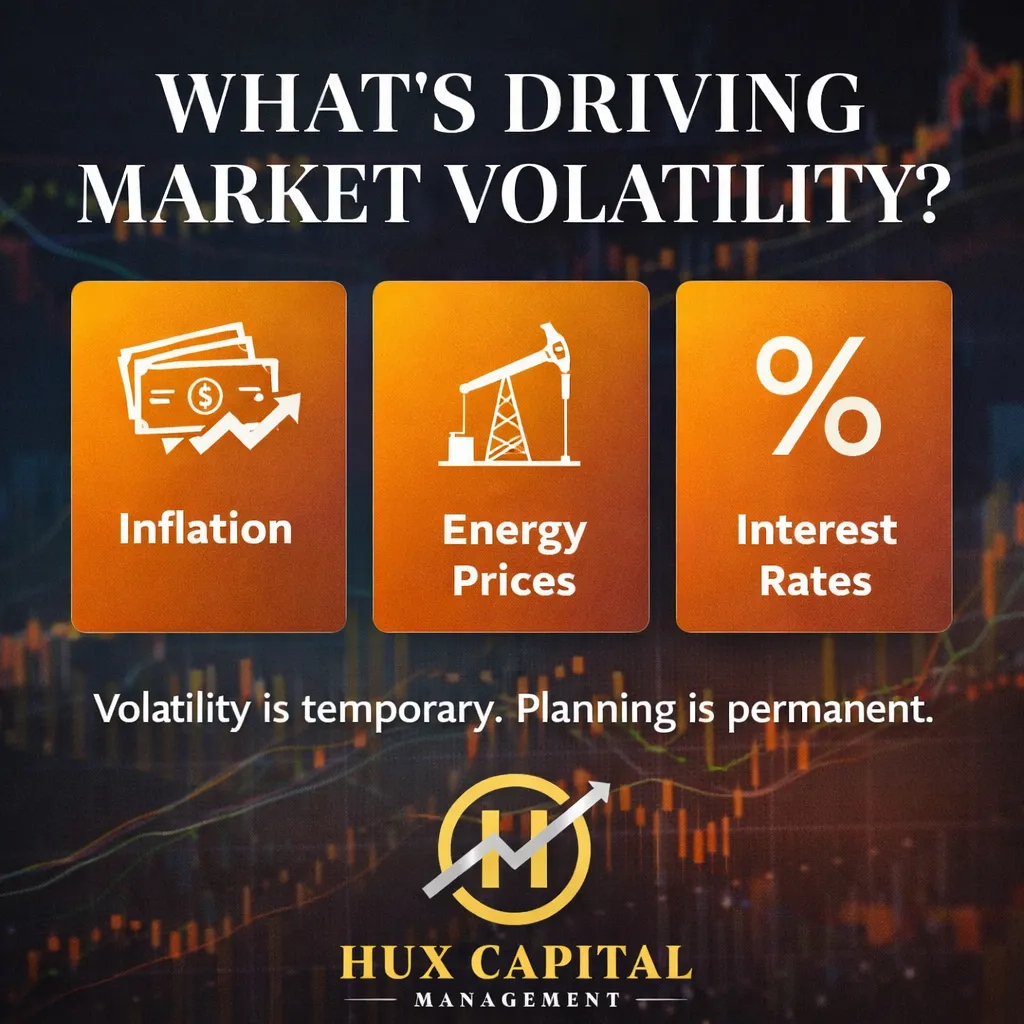
Inflation Is Still Stubborn
Recent economic reports show that inflation remains persistent. The Personal Consumption Expenditures (PCE) index rose 0.3% for the month, with core inflation rising 0.4% and reaching 3.1% year-over-year.
At the same time, the Consumer Price Index also increased 0.3% in February, reinforcing concerns that inflation may take longer to return to the Federal Reserve’s target.
These numbers matter because inflation influences interest rates, borrowing costs, and ultimately how markets behave.
Energy Prices Added to Market Volatility
Energy markets saw significant swings as geopolitical tensions disrupted supply expectations.
Oil prices surged early in the week toward $120 per barrel before settling closer to $103 by the end of the week.
Rapid price moves like this ripple through the global economy. Energy costs affect everything from transportation to manufacturing, which is why investors often react quickly to changes in oil markets.
Interest Rates Remain a Major Factor
The 10-year Treasury yield moved to around 4.28%, reflecting investor concerns that inflation may keep interest rates higher for longer.
Higher yields can create pressure on equity markets because they change the relative attractiveness of stocks compared to bonds.
As a result, major equity indices declined again last week, with the S&P 500 falling approximately 1.6%.
Markets Are Being Driven by Both Innovation and Risk
Despite the uncertainty, parts of the economy continue to show strength.
Technology infrastructure supporting artificial intelligence remains a powerful long-term growth trend. Strong corporate earnings in this space highlight how innovation can continue even during volatile periods.
However, markets today are clearly experiencing a push-and-pull between growth opportunities and macroeconomic risks.
What This Means for Investors
When markets become volatile, it can feel tempting to react quickly. But history has shown that long-term investors often benefit from maintaining a disciplined plan rather than responding emotionally to short-term headlines.
A well-constructed investment strategy considers both opportunity and risk. That means understanding how much risk is appropriate for your situation and ensuring your portfolio reflects that balance.
Periods of volatility are not unusual — they are part of how markets function over time.
The key question is not whether volatility will happen, but whether your plan is built to handle it.
Final Thoughts
Markets will continue to respond to economic data, geopolitical developments, and changes in interest rates.
Rather than trying to predict every short-term move, investors may benefit more from focusing on what they can control:
• Maintaining a long-term strategy
• Managing risk appropriately
• Staying informed but not reactive
Volatility may come and go, but a thoughtful financial plan is designed to navigate both calm and turbulent markets.
Book a meeting with our team, and let’s make sure you’re positioned with clarity and confidence.

Sources:
Data and commentary referenced in this article are derived from the following sources:
• Simplicity Wealth Weekly Market Commentary, March 16, 2026
https://www.simplicitygroup.com
• Charles Schwab Advisor Services – Macro Market Update, March 16–20, 2026
https://advisorservices.schwab.com
• U.S. Bureau of Economic Analysis – Personal Consumption Expenditures (PCE) Price Index
https://www.bea.gov/data/personal-consumption-expenditures-price-index
• U.S. Bureau of Labor Statistics – Consumer Price Index (CPI)
• U.S. Department of the Treasury – Treasury Yield Data
https://home.treasury.gov/resource-center/data-chart-center/interest-rates
• YCharts – Market data and index statistics
• CNBC – Market reporting and economic commentary
Disclosures:
This information is provided as general information and is not intended to be specific financial guidance. Before you make any decisions regarding your personal financial situation, you should consult a financial or tax professional to discuss your individual circumstances and objectives. Market data referenced reflects information available at the time of publication and is subject to change.
Investment advisory and financial planning services are offered through Simplicity Wealth, LLC, an SEC-registered investment adviser. SEC registration does not constitute an endorsement of the firm nor does it indicate that the adviser has attained a particular level of skill or ability. Investing involves the risk of loss. Insurance, Consulting and Education services offered through Hux Capital Management. Hux Capital Management is a separate and unaffiliated entity from Simplicity Wealth.
