What Market Rotation Means for Your Retirement Plan
What Market Rotation Means for Your Retirement Plan
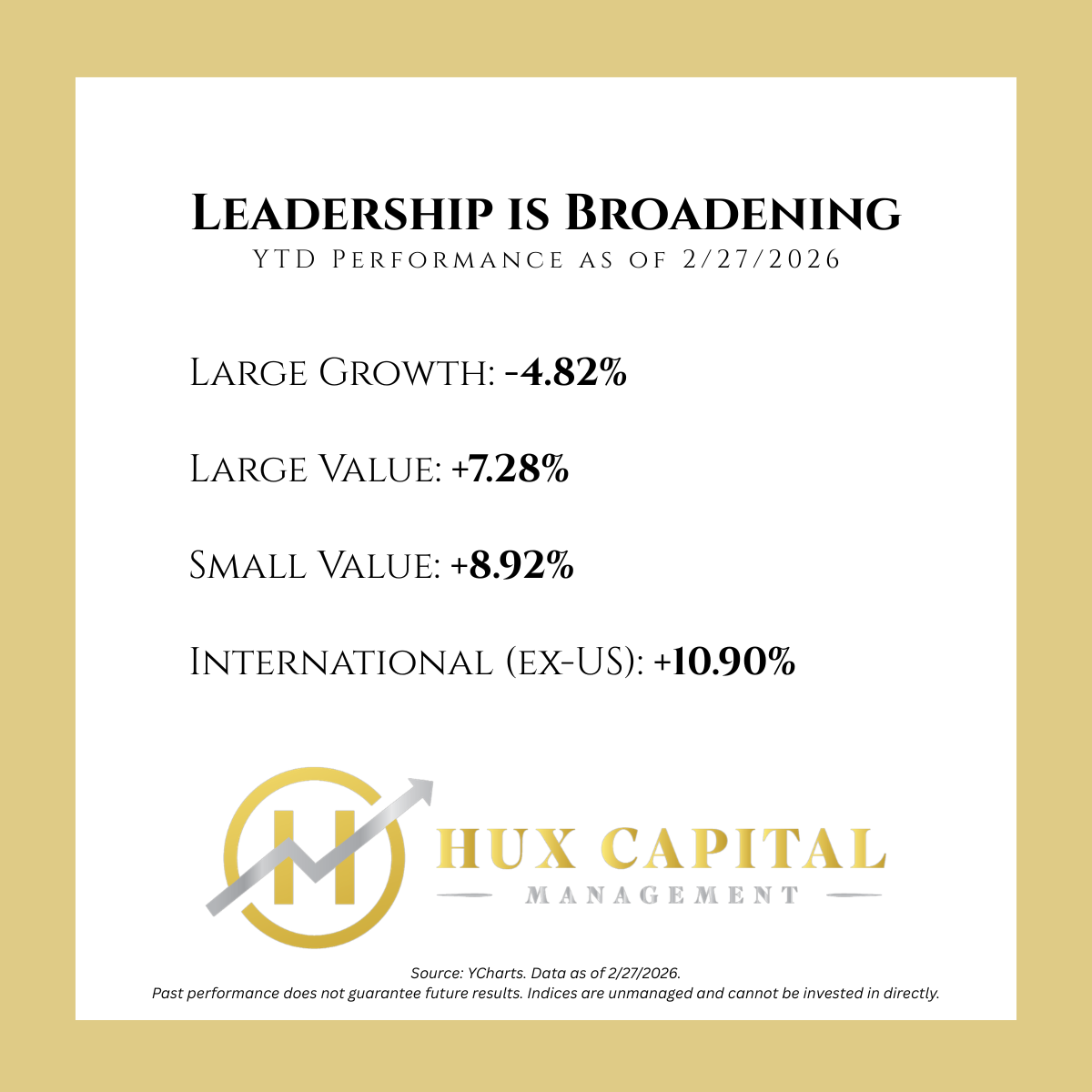
Over the last two years, a small group of large technology companies carried much of the market’s momentum. It seemed like every headline centered around artificial intelligence, innovation, and explosive growth.
Now we’re beginning to see something different.
Recent market activity suggests a shift — not necessarily a negative one — but a transition. Inflation data surprised slightly to the upside, interest rates have moved lower, and leadership inside the market is starting to broaden beyond just a handful of companies.
When this happens, investors often feel uncertain.
Is this the beginning of a downturn?
Is this just a pause?
Should I be doing something differently?
These are reasonable questions. But they’re not the most important ones.
The Real Question
The real question is:
Was your retirement plan built to handle changing environments in the first place?
Markets rotate. They always have.
Different sectors lead at different times. Economic cycles expand and contract. Interest rates rise and fall. Innovation creates opportunity, and sometimes it creates speculation.
None of that is new.
What matters is whether your strategy depends on “what worked last year” or whether it is built on structure, risk management, and long-term planning.
Inflation, Employment & What We’re Watching
Recent wholesale inflation data came in higher than expected. At the same time, bond yields declined as investors sought stability. This combination can feel confusing.
It simply means the market is reassessing expectations.
This week, attention turns to employment data and consumer spending. Strong labor markets can support economic growth, but persistent inflation can influence interest rate decisions.
Rather than trying to predict the next move, we focus on preparation.
Preparation means:
Understanding your income needs in retirement
Managing downside risk appropriately
Structuring portfolios intentionally
Avoiding overconcentration in any single theme
Excitement vs. Discipline
Bull markets often create excitement.
Transitions require discipline.
When markets broaden out beyond a small group of companies, it can create healthier long-term conditions. But it also exposes portfolios that were built without balance.
This is why education is so important to us. We want you to understand what you own and why you own it.
If your retirement plan only works when markets are calm and trending upward, that is not a plan — that is exposure.
Confidence Comes From Structure
Our goal has always been simple: to provide you with a clear, disciplined retirement plan designed to support you for the long term.
Confidence does not come from chasing performance.
It does not come from reacting emotionally.
It does not come from guessing.
It comes from:
A customized plan
Clear risk parameters
Ongoing review
Transparency
Markets will continue to change. They always do.
The question is not whether volatility will occur.
The question is whether your retirement plan was built with the expectation that it will.
If you’re unsure, let’s have a conversation.
There is never a cost or obligation for us to sit down and evaluate where you stand. Our responsibility as fiduciaries is to act in your best interest, and we take that seriously.
Start by getting a snapshot of where you are now. https://app.asset-map.com/i/Dj1vvlNM
Investment advisory and financial planning services are offered through Simplicity Wealth, LLC, an SEC-registered investment adviser. SEC registration does not constitute an endorsement of the firm nor does it indicate that the adviser has attained a particular level of skill or ability. Investing involves the risk of loss. Insurance, Consulting and Education services offered through Hux Capital Management. Hux Capital Management is a separate and unaffiliated entity from Simplicity Wealth. This information is provided as general information and is not intended to be specific financial guidance. Before you make any decisions regarding your personal financial situation, you should consult a financial or tax professional to discuss your individual circumstances and objectives.


